08/08/2022

Crimson Peak

Ghosts are real, that much I know. I've seen them all my life..."       

I don't know how many times I watched it. Impossible to count. I can say that it is my only favorite among ghost and gothic movies. I may suddenly find myself watching this movie later in the evening. There is a miraculous and magical side that attracts me. Not only did I love every silly, gothic, gorgeous minute of Guillermo del Toro’s Crimson Peak, but I am also actually suspicious of those who didn’t.  If you say, “It’s too derivative!”, I will reply, “That’s kind of the point.” And if you say, “It’s not scary enough!”, I will counter with, “Have you ever seen a gothic horror romance?” And if you say, “It’s too beautiful; it is overly art directed!”, I will simply stare at you, agog, and say, “Are you insane?”

Let me tell you a little bit about my favorite movie and my favorite character, Edith Cushing. I don't want to summarize the movie for you. I just wanted to write down why I love this movie so much. This is everything. I hope you can find a lucky time to watch this movie.

"Beware of Crimson Peak," an eerie voice warns Edith. The gothic offering that shares its name with a crumbling mansion atop clay-filled heights is a dark delight that haunts with its unsettling mood and enchants with exquisite imagery. This dark delight makes you realize love how ghosts turned out to be good ones.            

The house is also a character in the film with its missing ceiling, bug infestations, rattling elevator, red clay coming up through the floorboards, and, of course, its ghosts. I have rambled a bit about the look of the film, but it is the most spellbinding element of the film. The ghosts are so brilliant to look at that I find myself admiring their effects of them instead of being outright terrified every single watching. As gruesome as they are ingeniously imagined I find myself watching them very intently and saying in my head “brilliantly done”.

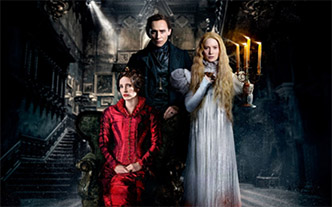
As Crimson Peak's Edith, Mia Wasikowska plays a writer, a Buffalo, New York native, who meets Tom Hiddleston's mysterious, eccentric British aristocrat Sir Thomas Sharpe, and his sister Lucille. Edith is an aspiring novelist. Edith draws comparisons to Jane Austen in Crimson Peak, which she perceives as a slight — she doesn't want to be a romance writer. She prefers horror. (She's in the right movie for that.) Her role model, instead, is Gothic horror writer Mary Shelley, the author best known for Frankenstein. But even when she writes ghost stories instead of romances, these are seen as quaint and endearing rather than terrifying. Unlike Shelley, who was treated as a serious novelist during her lifetime, Edith struggles to be taken seriously. (However, since Shelley's death, the author has been primarily remembered for Frankenstein alone among her written works, and beyond that, as the wife of Percy Bysshe Shelley.)

Guillermo del Toro tries his elegant best to shake the cobwebs from a musty old genre but still ends up telling a very traditional and predictable haunted house yarn in Crimson Peak. The gifted fantasy/sci-fi/horror specialist has made a film that’s very bloody, and bloody stylish at that, one that’s certainly unequaled in its field for the beauty of its camerawork, sets, costumes and effects. But it’s also conventionally plotted and not surprising or scary at all, as it resurrects hoary horror tropes from decades ago to utilize them in conventional, rather than fresh or subversive, ways.

This crimson clay is, at first glance, a symbol of blood and death so obvious. Yet the use of clay as a visual metaphor highlights a central tension in the film. At the same time, the house itself is a repository of memories and specters. This is not only spiritual, but mechanical, as gramophones replay the secrets of the past, paintings capture the severity of a gaze, and Thomas’s inventions seek to penetrate into the ground to recapture the wealth and influence of his ancestors.

In conclusion, “Crimson Peak” is a brilliant, creepy, and very effective supernatural thriller. It always draws me in. If you ask me, Crimson Peak is obviously Del Toro's love letter to romanticism, gothic horror, and good old-fashioned haunted house stories.


Crimson Peak

Ghosts are real, that much I know. I've seen them all my life..."       

I don't know how many times I watched it. Impossible to count. I can say that it is my only favorite among ghost and gothic movies. I may suddenly find myself watching this movie later in the evening. There is a miraculous and magical side that attracts me. Not only did I love every silly, gothic, gorgeous minute of Guillermo del Toro’s Crimson Peak, but I am also actually suspicious of those who didn’t.  If you say, “It’s too derivative!”, I will reply, “That’s kind of the point.” And if you say, “It’s not scary enough!”, I will counter with, “Have you ever seen a gothic horror romance?” And if you say, “It’s too beautiful; it is overly art directed!”, I will simply stare at you, agog, and say, “Are you insane?”

Let me tell you a little bit about my favorite movie and my favorite character, Edith Cushing. I don't want to summarize the movie for you. I just wanted to write down why I love this movie so much. This is everything. I hope you can find a lucky time to watch this movie.

"Beware of Crimson Peak," an eerie voice warns Edith. The gothic offering that shares its name with a crumbling mansion atop clay-filled heights is a dark delight that haunts with its unsettling mood and enchants with exquisite imagery. This dark delight makes you realize love how ghosts turned out to be good ones.            

The house is also a character in the film with its missing ceiling, bug infestations, rattling elevator, red clay coming up through the floorboards, and, of course, its ghosts. I have rambled a bit about the look of the film, but it is the most spellbinding element of the film. The ghosts are so brilliant to look at that I find myself admiring their effects of them instead of being outright terrified every single watching. As gruesome as they are ingeniously imagined I find myself watching them very intently and saying in my head “brilliantly done”.

As Crimson Peak's Edith, Mia Wasikowska plays a writer, a Buffalo, New York native, who meets Tom Hiddleston's mysterious, eccentric British aristocrat Sir Thomas Sharpe, and his sister Lucille. Edith is an aspiring novelist. Edith draws comparisons to Jane Austen in Crimson Peak, which she perceives as a slight — she doesn't want to be a romance writer. She prefers horror. (She's in the right movie for that.) Her role model, instead, is Gothic horror writer Mary Shelley, the author best known for Frankenstein. But even when she writes ghost stories instead of romances, these are seen as quaint and endearing rather than terrifying. Unlike Shelley, who was treated as a serious novelist during her lifetime, Edith struggles to be taken seriously. (However, since Shelley's death, the author has been primarily remembered for Frankenstein alone among her written works, and beyond that, as the wife of Percy Bysshe Shelley.)

Guillermo del Toro tries his elegant best to shake the cobwebs from a musty old genre but still ends up telling a very traditional and predictable haunted house yarn in Crimson Peak. The gifted fantasy/sci-fi/horror specialist has made a film that’s very bloody, and bloody stylish at that, one that’s certainly unequaled in its field for the beauty of its camerawork, sets, costumes and effects. But it’s also conventionally plotted and not surprising or scary at all, as it resurrects hoary horror tropes from decades ago to utilize them in conventional, rather than fresh or subversive, ways.

This crimson clay is, at first glance, a symbol of blood and death so obvious. Yet the use of clay as a visual metaphor highlights a central tension in the film. At the same time, the house itself is a repository of memories and specters. This is not only spiritual, but mechanical, as gramophones replay the secrets of the past, paintings capture the severity of a gaze, and Thomas’s inventions seek to penetrate into the ground to recapture the wealth and influence of his ancestors.

In conclusion, “Crimson Peak” is a brilliant, creepy, and very effective supernatural thriller. It always draws me in. If you ask me, Crimson Peak is obviously Del Toro's love letter to romanticism, gothic horror, and good old-fashioned haunted house stories.


Del Toro's Pinocchio

Have you read Carlo Collodi’s 1883 novel The Adventures of Pinocchio, the basis for Disney’s animated film? It’s an incredibly disturbing book. Many of the basics we see in the movie are there—Pinocchio is carved from wood by an old man who wishes for a son, he comes to life, he runs away at the behest of a scheming fox and cat, he ends up in a puppet show, he goes to a place where boys enjoy themselves until they turn into donkeys, he rescues his creator from the belly of a giant fish, and he becomes a real boy. But Collodi’s version is so much darker and more disturbing. It originated as a newspaper serial, so it’s made up of short episodes, almost all of which involve death, mutilation, or some grotesque betrayal. Pinocchio is a selfish little beast, aggressive and violent, and constantly defying authority. He deliberately betrays his father and the good fairy over and over, including at one point when he’s behaved himself for a year and is literally one day away from becoming a real boy.

And now it's in Del Toro's hands!

Guillermo del Toro very well knows how to tell a fantastical story. The beloved director brought magical realism to life in films like Pan’s Labyrinth, Crimson Peak, and The Shape of Water, the latter of which earned him Oscars for Best Picture and Best Director. It seems his mind is geared towards dark fairy tales, which makes him the perfect man to tackle Pinocchio.

Director Guillermo del Toro is perhaps most well-known for exploring topics rife with gothic romance, frightening monsters, and occasionally a fish-dude who wins the affections of a human woman — "The Shape of Water," of course, went on to win Best Picture against all odds and further bring del Toro's unique sensibilities into the mainstream.

“I’ve always been very intrigued by the links between Pinocchio and Frankenstein,” del Toro told Vanity Fair. “They are both about a child that is thrown into the world. They are both created by a father who then expects them to figure out what’s good, what’s bad, the ethics, the morals, love, life, and essentials, on their own. I think that was, for me, childhood. You had to figure it out with your very limited experience.” Guillermo Del Toro

Guillermo del Toro makes it clear he is taking a big shift from the traditional Italian classic and also the 1940 Disney adaptation. He elaborates, “It’s counter to the book because the book is seeking the domestication of the child’s spirit in a strange way,” the director says. “It’s a book full of great invention, but it’s also in favor of obeying your parents and being ‘a good boy’ and all that. This movie is about finding yourself and finding your way in the world-not just obeying the commandments that are given to you but figuring out when they are okay or not.”

To underline his themes in this adaptation he has changed the world the story will be set in, “an environment in which citizens behave with obedient, almost puppet-like faithfulness” he explains. He has set the story in WWII Italy. del Toro concludes with, “Blind obedience is not a virtue. The virtue Pinocchio has is to disobey. At a time when everybody else behaves as a puppet-he doesn’t. Those are the interesting things, for me. I don’t want to retell the same story. I want to tell it my way and, in the way, I understand the world.”

Del Toro's statement got me pretty excited. I cannot wait to see the version that comes out of this amazing director's mind as soon as possible. We all will hold our breath on Netflix in December.

Dust of Beyla

Beyla the Goddess of Bees in Norse Mythology

People who have read the old Norse sagas will nod to the fact that the sagas are often written in code, which often leads people to interpret them in many ways. The spider web that we call the internet is filled with claims about this and that from Norse mythology, and one of these claims is that there is a bee Goddess named Beyla.

Beyla is the wife of Byggvir, and both of them are servants of the God Freyr. There is in fact, not much written about Beyla or her husband, but you are of course entitled to have your own opinion, just like I have my opinion. Some people have speculated that her name might mean either” little bean” or “bee”, something that I can neither confirm nor deny from my research on this. From what I can read in the Poetic Edda, she is nothing more than a servant that serves mead for the Gods and Goddesses in Asgard, and the small bits that are written of her can pretty much be read in Lokasenna.

Beyla said:

“The mountains shake, and surely, I think

From his home comes Hlorrithi now;

He will silence the man who is slandering here together both gods and men.”

Loki said:

“Be silent, Beyla! thou art Byggvir’s wife,

And deep art thou steeped in sin; A greater shame to the gods

came ne’er, Befouled thou art with thy filth.”

After this, Thor bursts in and threatens Loki, prompting him to flee.

There is not really anything written about bees in Norse mythology, and if anyone could be the bee queen in Norse mythology, it would make more sense if it was Freya who is the Goddess of love and fertility. If we want to read about bees from the Viking age, we need to look up the dusty old scrolls that were written by the Anglo-Saxons, but here, there is also no mention of a bee Goddess, but only of the use of honey and the warnings of the bees. An example of this poetry can be read in the Exeter Book.

The Exeter Book – Riddle 25

I am man’s treasure, taken from the woods,

Cliff-sides, hill-slopes, valleys, downs;

By day wings bear me in the buzzing air,

Slip me under a sheltering roof-sweet craft.

Soon a man bears me to a tub. Bathed,

I am binder and scourge of men, bring down

The young, ravage the old, sap strength.

Soon he discovers who wrestles with me

My fierce body-rush-I roll fools

Flush on the ground.

Robbed of strength, Reckless of speech, a man knows no power Overhands, feet, mind. Who am I who bind Men on Middle earth, blinding with rage? Fools know my dark power by daylight.

Honeybees are dying at an alarming rate. Today, the honey bees are struggling, and many of them are disappearing at an alarming rate. We have lost the connection to nature. An increasing number of people move to bigger cities across the planet, and the effects of this urbanization, have many consequences on the environment. These concrete jungles leave little to no room for our wildlife, and the flowers that do fight their way through a crack in the ground will quickly end their fate under the shoes of a pedestrian.

Bees are very important pollinators, without which many of the crops that keep industries and families alive would suffer and die off. We need bees. We may take them and other pollinators like butterflies and hoverflies for granted, but they're vital to stable, healthy food supplies and key to the varied, colorful, and nutritious diets we need.

But bees are in trouble.

More than ever before, we need to recognize the importance of bees to nature and to our lives. And we need to turn that into action to ensure they don't just survive but thrive.


Neptün’ün Deniz Çayırları

Bundan birkaç yıl önce bir sabah erken saatlerde kütüphane kartımı yenilemek için New York Halk Kütüphanesi’ne gitmiştim. Şehirdeki işlerimi hızlıca halledecek ve rotamızın New Jersey- Rhode Island olacağı yol gezimiz için hazırlık yapacaktım. Amerika’da kıyı şeridi gezileri her zaman keyifli olmuştur. Newport- Rhode Island güzel evleri, muhteşem manzarası, heyecan verici kumsalı ve kaliteli yemekleriyle tek kelimeyle büyülemişti beni. Adetimizdir, ilk gittiğimiz yerlerde hemen bir kitapçı ve kütüphane ararız. Orada da gelenek değişmedi ve ilk gördüğümüz kitapçıda durduk. Koridorun sonunda bir etkinlik olduğunu fark ettim. Şirin bir sahil kasabası ruhunu hissettiren bu küçük kitapçıda bir yazarın okuma günü vardı. Jack ve ben diğer tarafta sessizce kitapları incelerken bir yandan kulağımız yazarın konuşmasındaydı.

Bir ara Neptune dendiğini duyar gibi oldum. Ardından yeniden duyunca iyice kulak kabarttım. Kadın yazar Neptune Seagrass adı verilen orijinal adı Posidonia Oceanica olan bir deniz çayırından bahsetmeye başladı. Hem Neptune hem deniz bir arada olunca kayıtsız kalmam imkansızdı elbette. Kalmadım. Yaklaştım ve elimde az önce raftan incelemek için aldığım iki fantasy fiction novel ile en arkadaki boş koltuğa oturuverdim.

Yazar, duygusal çelişkiler yaşayan genç bir kadının yaşam öyküsünü kaleme almış. Ana karakter ailesini bulmak için çocukluğunun geçtiği İspanya kıyılarına geri dönüyor. Orada bir deniz biyoloğu ile tanışıyor ve aralarında bir dizi mistik olaylar yaşanmaya başlıyor. Yazar, bu deniz biyoloğunun diyaloglarından birini anlatırken Neptune demişti. Orada Neptün Deniz Çayırlarının mucizevi işleyişinden bahsetti. O kadar etkilendim ki, arabaya geçer geçmez telefonumun not defterine bu bitki ile ilgili dinlediğim notları almaya başladım. Aslında size Rhode Island gezimden bahsedeceğim sandınız muhtemelen fakat hayır ben size bu olağanüstü deniz çayırından bahsedeceğim. Bakın aşağıda neler yazdım : )


***

Mavi buz devi, su perilerinin mekanı, şiddetli kasırgaların, çılgın tufanların, dipsiz okyanusların gezegeni görkemli Neptün. Selkie ve Kelpie’lerin, Banshee, Huldra ve Puca’ların aynı vatoz şehirlerde yaşadıkları ölümsüz sular diyarı Neptün…

Neptün…Mistik hikayelere sahip bir gezegen olmanın ötesinde dünya denen ölümlü toprakların olağanüstü sularının derinliklerinde yaşayan ve adeta gizli bir silah olan deniz çayırlarına da bahşedildi bu isim. Neden mi gizli silah dedim? Çünkü Neptune Seagrass adı verilen bu mucizevi çayır tam anlamıyla Akdeniz’in akciğerleri gibi. Ayrıca dünyadaki en eski ve en büyük canlı organizma olduğu düşünülüyor; bir grup bilim insanı, İspanya'dan Kıbrıs'a kadar okyanus tabanını kaplayan çeşitli deniz otları olan Neptün otu olarak bilinen Posidonia Oceanica'nın DNA'sını sıraladılar ve görünüşe göre 200.000 yıllık bitkiler buldular.

Bu çayır adını, mitolojide sadece fırtınaları, selleri, depremleri ve diğer felaketleri kovmakla kalmayıp aynı zamanda denizcileri ve gemilerini koruyan, Romalılar tarafından Neptün olarak bilinen Antik Yunan deniz tanrısı Poseidon'dan almıştır. Bu nedenle Posidonia Oceanica, büyük efsanevi sellere, batık sonsuzluk rüyalarına ve deniz kızları gibi harika yaratıkların gizemlerine hitap eden pek çok sembolizmle doludur.


Neptün Deniz Çayırı’nın görkemli tarihi kadar faydaları da bu kadarla sınırlı değil. Sadece Akdeniz’de bulunan Neptün Deniz Otu Çayırları Amazon yağmur ormanlarının eşdeğer alanından daha fazla oranda karbondioksit emiyor. İnanılmaz değil mi?

Ve Neptün’ün bir de topları var. Araştırmacılar, Neptün toplarının her yıl 800 milyondan fazla plastik parçası yakaladığını söylüyor. Barselona Üniversitesi'nden bilim adamları, bu deniz çayırında ilginç bir davranış fark ettiler. Araştırmacılar, bu bitkinin istemeden plastik kirliliğini filtreleme ve temizleme yeteneği karşısında hayrete düştüler ve araştırma sonucunda deniz çayırlarının "Neptün topları" olarak bilinen doğal lif demetleri aracılığıyla su altındaki plastik kirliliğini hapsettiğini keşfettiler. Ne yazıktır ki okyanuslar genellikle karaya atılan plastikler ve diğer çöp parçaları için nihai varış noktasıdır. İşte Neptün’ün topları bu hususta da mucizevi tavrını göstermeye devam ediyor.

Daha az plastik üretimi ve tüketimi, plastik yerine çözülebilirliği yüksek malzemeler kullanmak, yeniden ve yeniden kullanmak, geri dönüşümü teşvik edici ve kolaylaştırıcı çalışmalar yapmak, tek kullanımlık ürünler yerine tekrar kullanılabilir ürünler üretmek gibi daha birçok çözüm yöntemleri var ve bunların hepsini birden uygulamak gerekir. Piyasanın kaygıları değil de insani ve ekolojik kaygılar ön planda tutulduğu sürece yol almamız mümkün olacaktır.

Evet, deniz canlılarının yaşamını tehdit eden kirlilik, plastik atıklar, insanların sorumsuz davranışları, ülkelerin yeterli önlemi almamaları, bu konuya yeteri kadar aciliyet vermemeleri vb. tutumlar ve yetersiz politikalar yakın geleceğimizi tehdit etmeye devam ediyor. Bu konularla ilgili daha önceki makalelerimi okumak için “Bütün Makaleleri” kısmına bir göz atabilirsiniz. Duyarlı olmanız dileğiyle.

https://www.eurovizyon.co.uk/m/neptunun-deniz-cayirlari-makale,9554.html

Anlatan mı, Susan mı?

  Geçen gün Netflix’de yayına giren His&Hers dizisini bir solukta bitirdiğimi belirtmeliyim. Bir kurgu yazarı gözüyle izlediğimde eleşti...